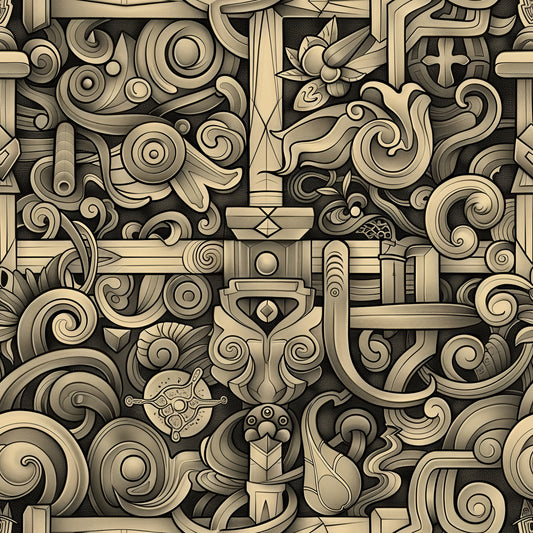
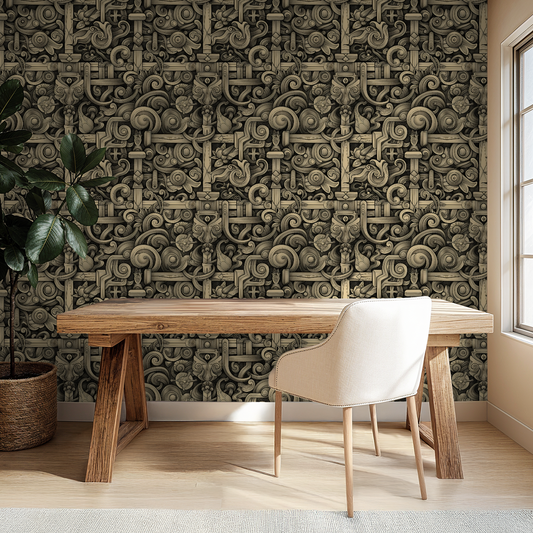
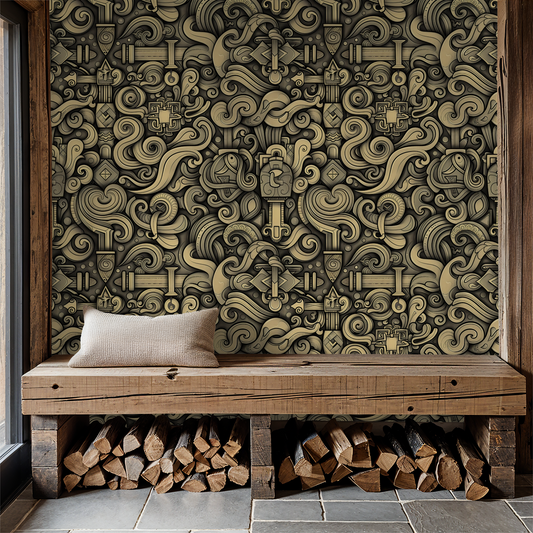
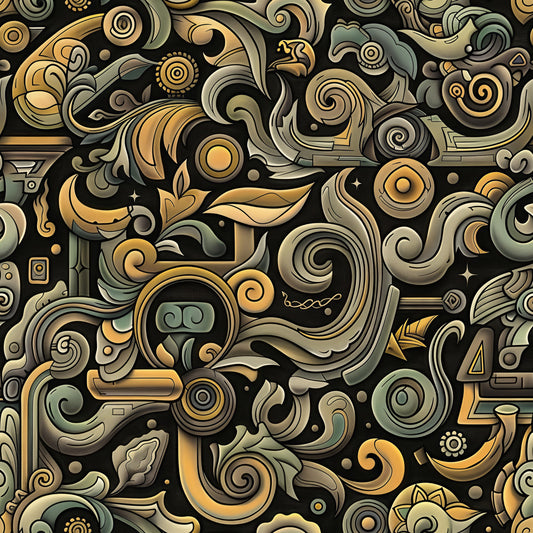
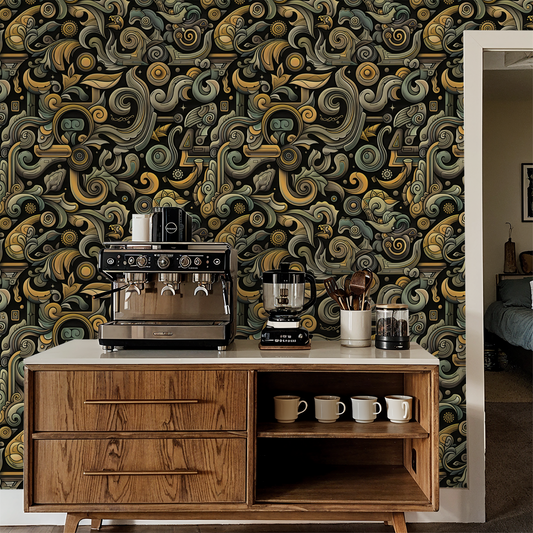
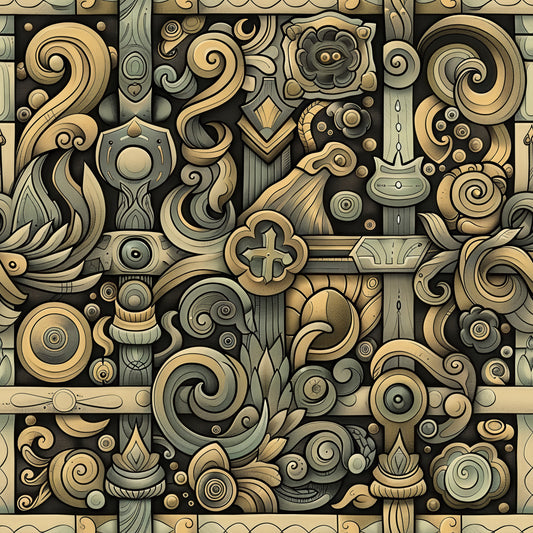
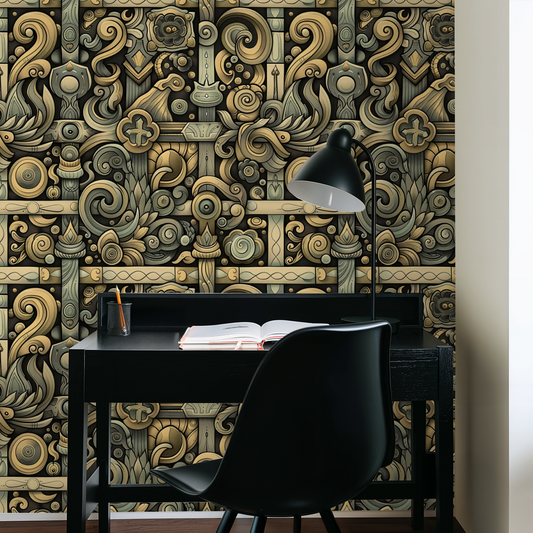
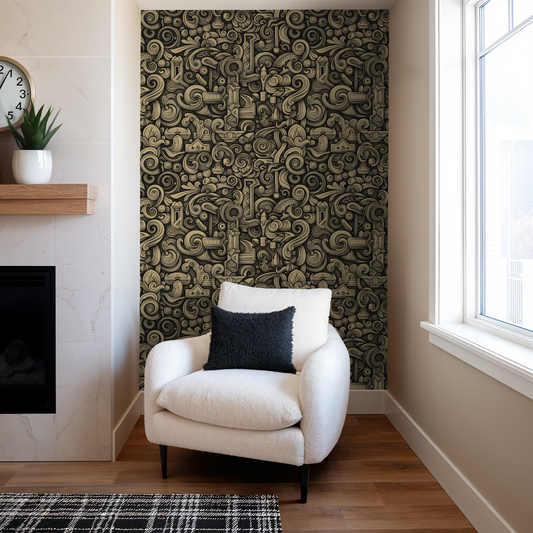
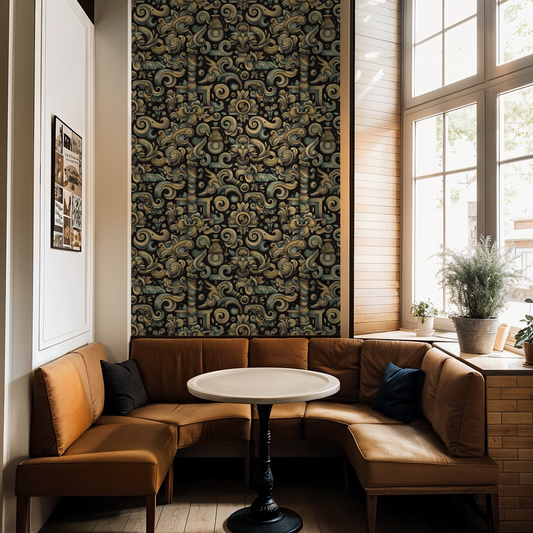
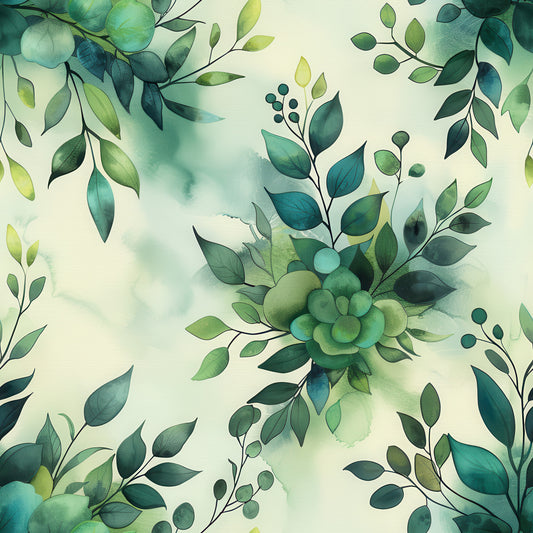
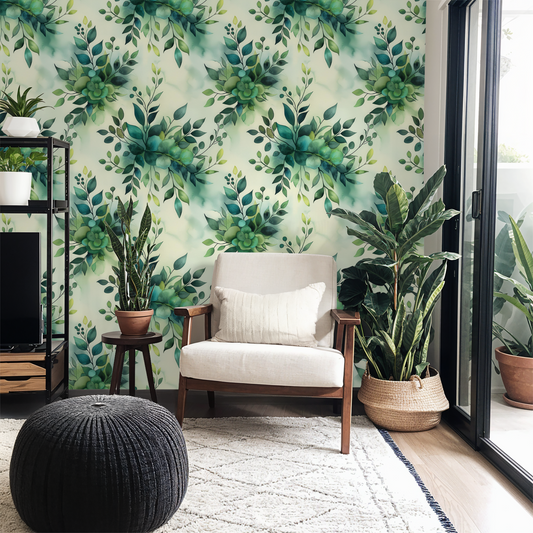
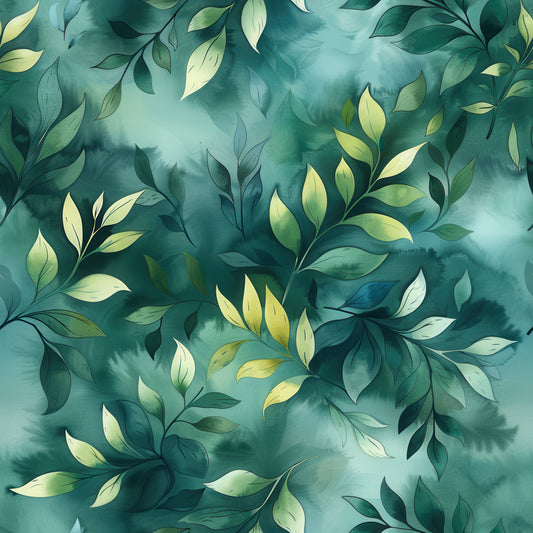
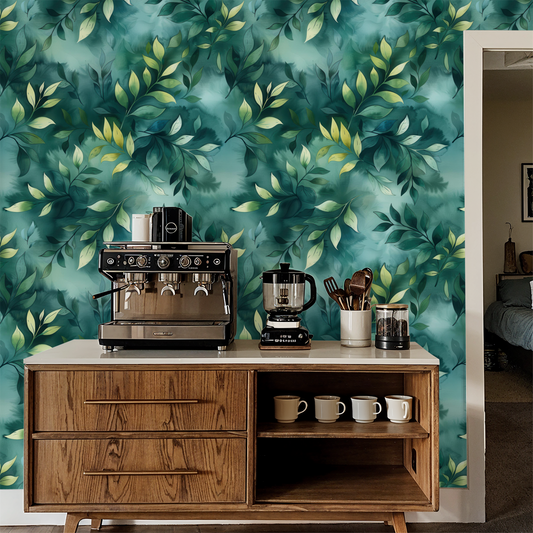
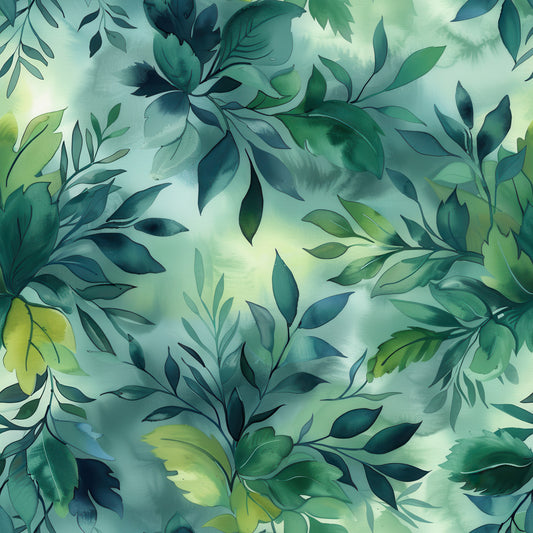
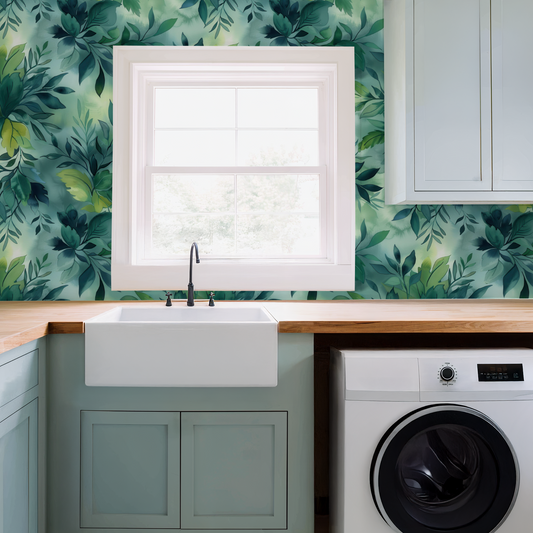
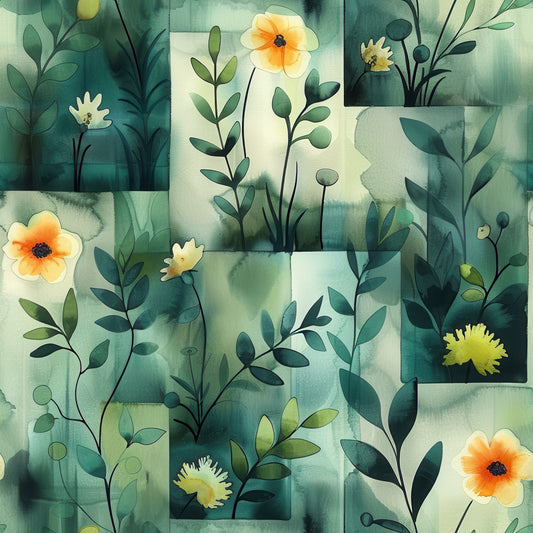
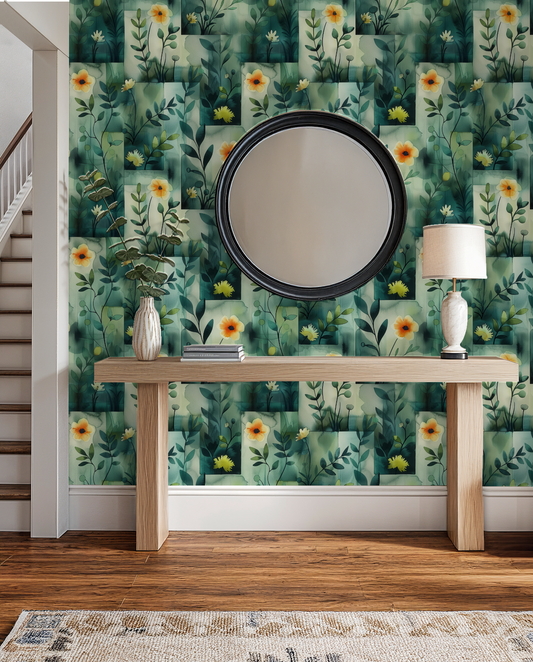
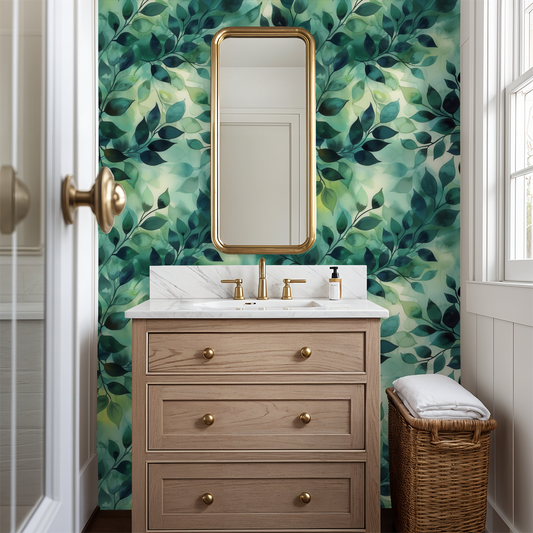
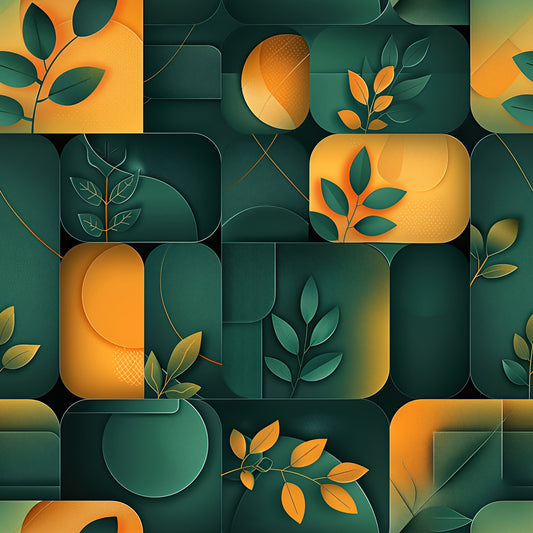
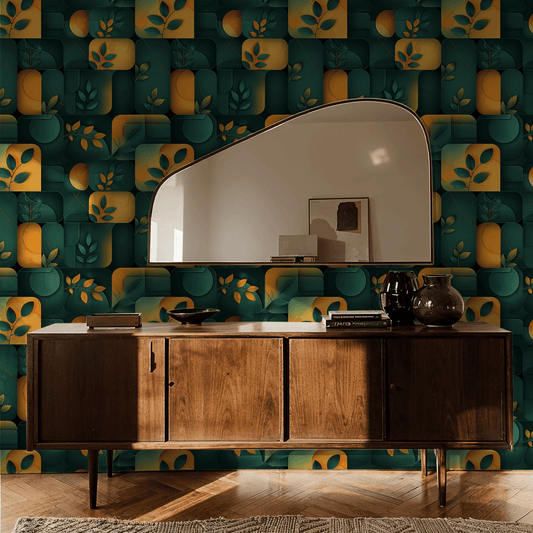
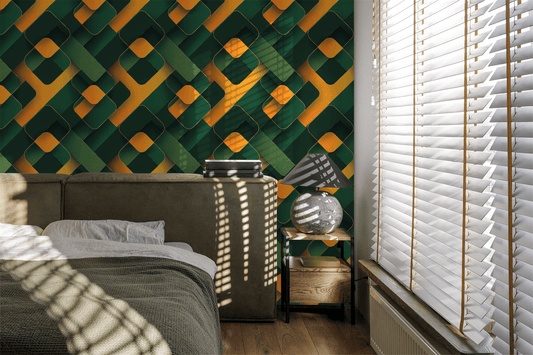
A paper meadow that decided florals could be architectural.
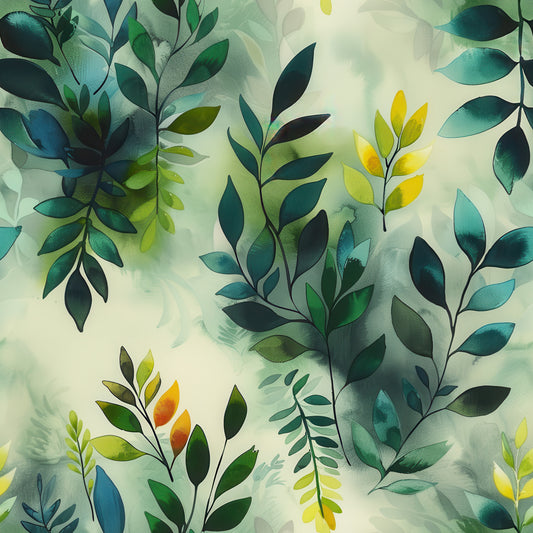
Garden layers oversized sage leaves with water lilies in various stages of bloom—butter-yellow petals cradled by coral bases, connected by delicate rust-red stems that trace organic paths across the teal backdrop. The scale creates drama while the dimensional construction adds depth that makes you forget you're looking at a flat surface. This is botanical design that understands structure matters as much as beauty.
The vibe: Lush without being busy. Modernist garden planning meets traditional paper craft. The kind of pattern that works equally well in a minimalist loft or a maximalist's fever dream—which is harder to pull off than it sounds.
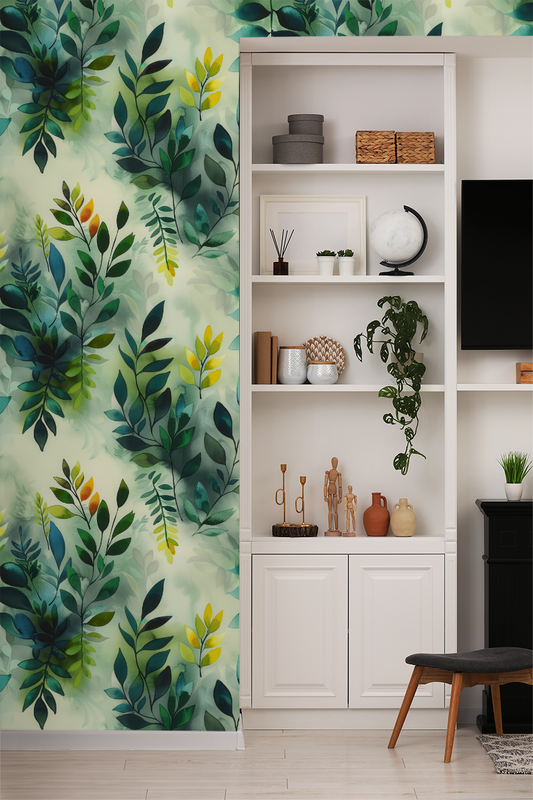
Works beautifully in: Dining rooms that host more than frozen pizza, living spaces that need a focal point with staying power, upscale waiting rooms, yoga studios, boutique hotels, creative office spaces, or anywhere you want nature-inspired design that doesn't scream "I got this at a garden center." This is for people who want botanical without the cottage core baggage.
Real talk: Garden is the fullest composition in the Papercut collection. The large-scale leaves create rhythm and structure, while the varied bloom sizes add visual interest at multiple distances. It's bold enough to carry a room but sophisticated enough that you won't get tired of it. The layering creates genuine depth—those oversized leaves cast shadows that shift throughout the day, making the pattern feel alive.
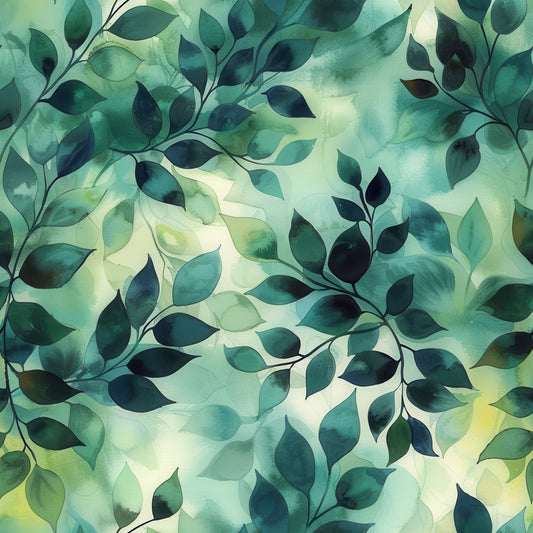
The color palette does heavy lifting here. The sage leaves cool down the warm blooms, the teal background provides breathing room, and those rust-red stems tie everything together without being obvious about it.
For people who want maximum impact with maintained sophistication, layer lovers, and anyone who thinks "botanical wallpaper" shouldn't automatically mean "grandma's sun room."
Available in 19" wide rolls across three material tiers—because patterns this layered deserve proper execution.
Collection note: Part of the Papercut series, where we prove that dimensional design can be both bold and refined, and florals are only boring if you make them that way.
First wall? Our measuring guide takes ten minutes, and the peel-and-stick and paste-the-wall install guides walk you through hanging day.