Where organic chaos meets architectural order.
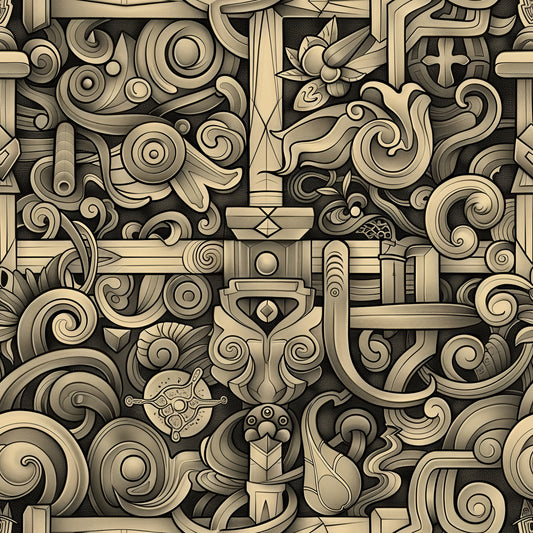
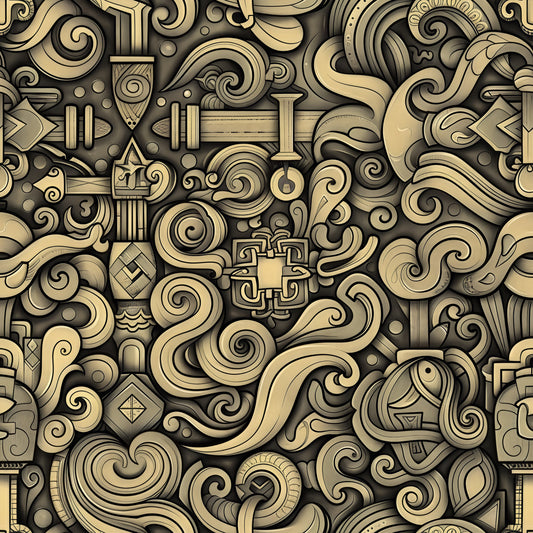
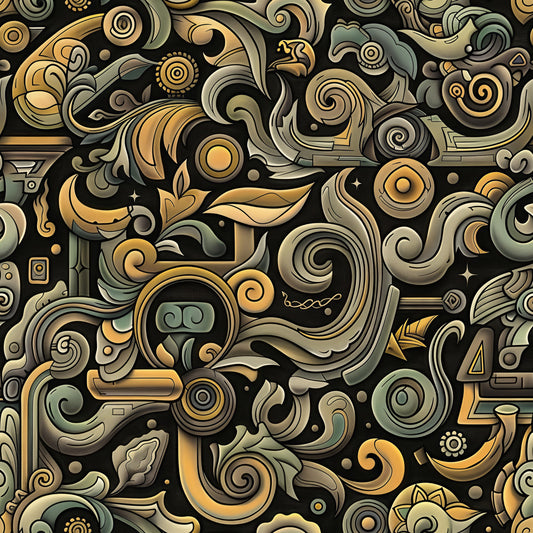
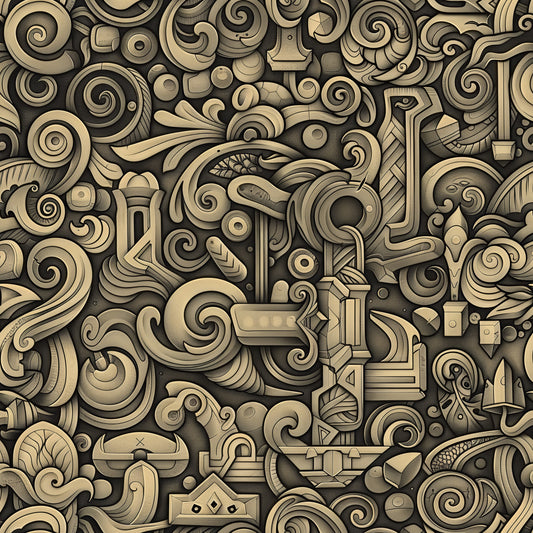
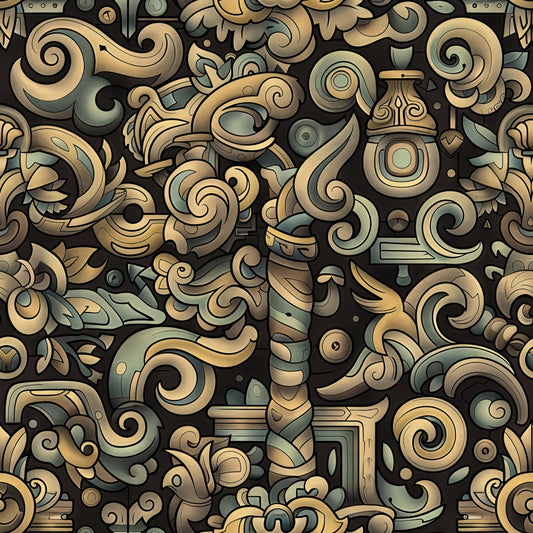
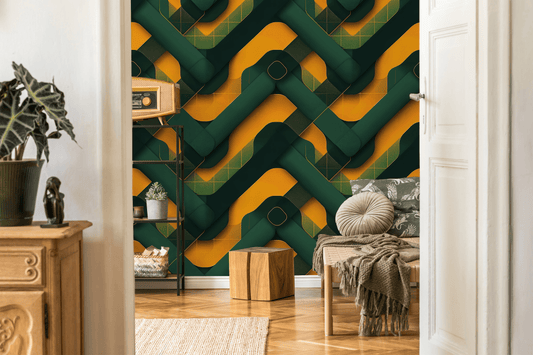
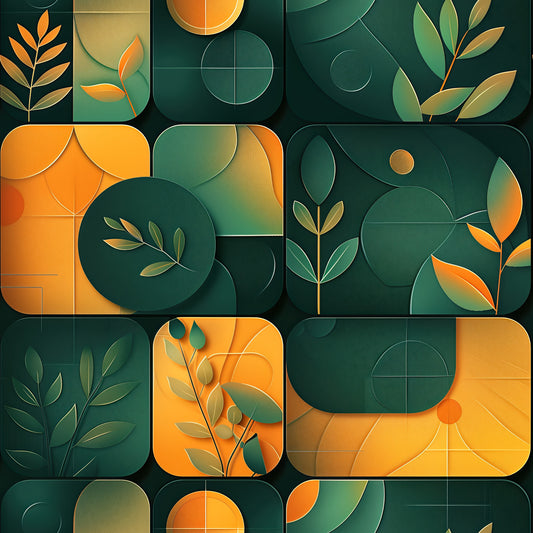
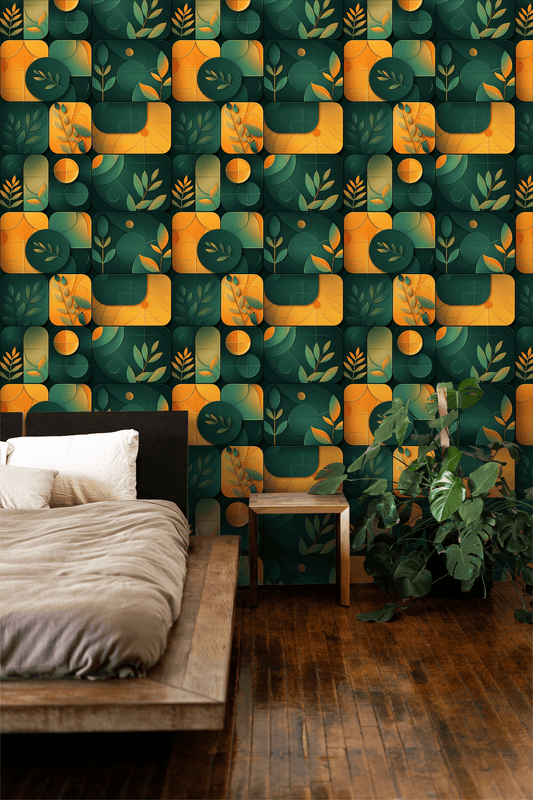
Temple Flux gives you the most balanced interplay between flowing spirals and structured elements in the Aztec Underground collection—columns and geometric forms anchor the composition while serpentine curves and scrollwork create continuous movement across the surface. The muted sage greens soften the dominance of aged gold and bronze, preventing the pattern from reading as purely metallic while adding an unexpected organic quality to ceremonial imagery. The dimensional rendering creates genuine depth variation, with overlapping elements suggesting carved relief rather than flat illustration. It's the collection's meditation on controlled complexity.
The vibe: Ancient architecture filtered through contemporary abstraction. Ornate without being ornamental. The kind of pattern that makes you look twice to figure out where one element ends and another begins—then look a third time because you spotted something new.
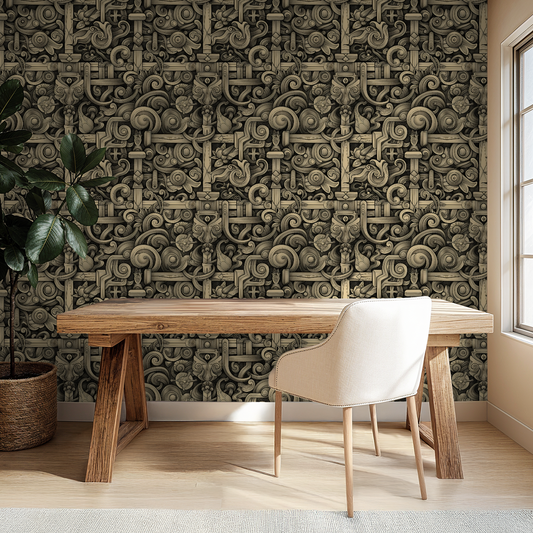
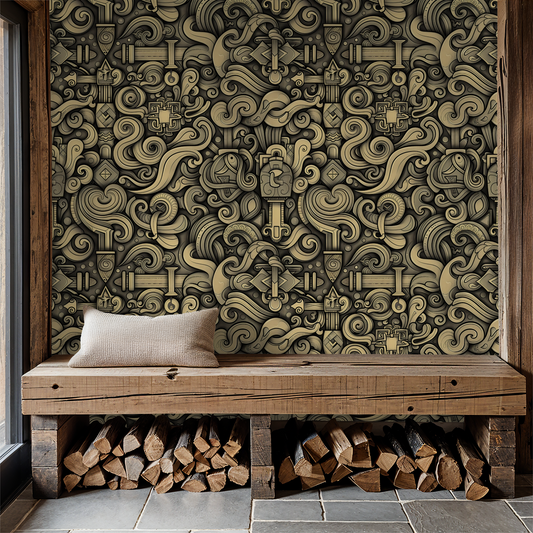
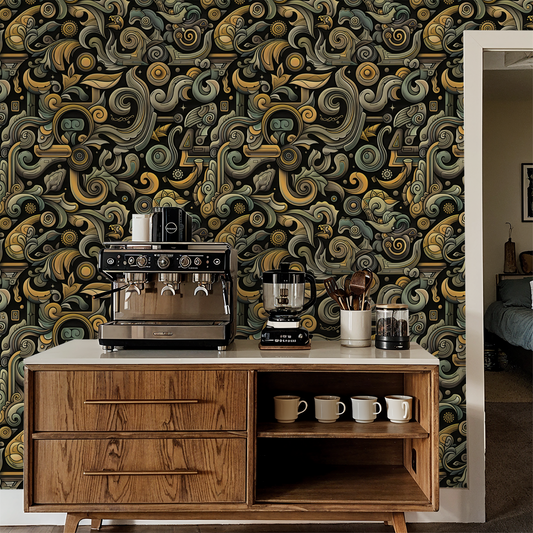
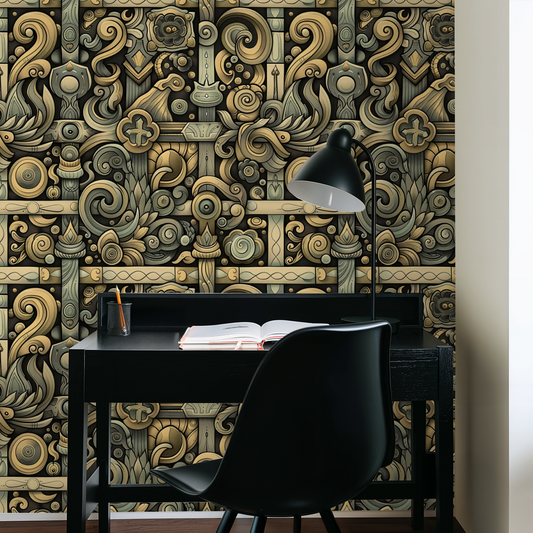
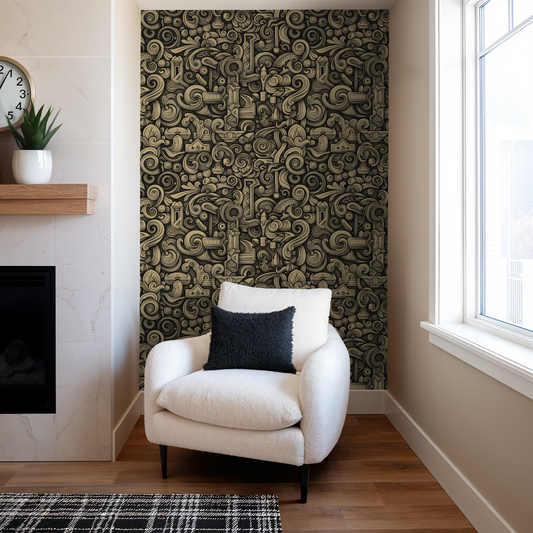
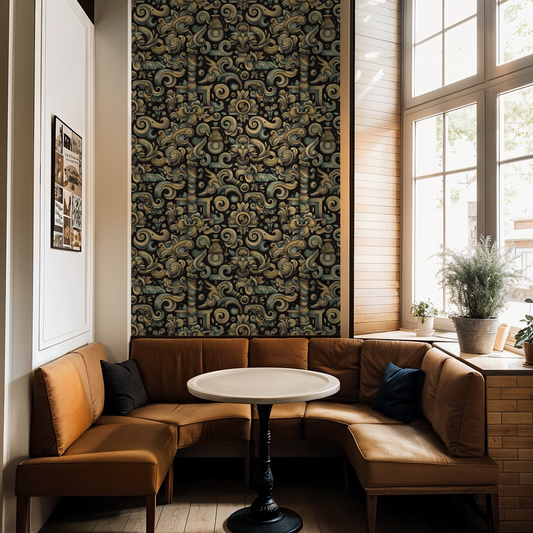
Works beautifully in: Creative agency offices, upscale tattoo parlors, craft brewery tasting rooms, boutique hotel corridors, architectural design studios, gallery-style dining rooms, yoga studios with elevated aesthetics, or any space where "sophisticated but not stuffy" is the mandate. This is for people who appreciate intricacy without needing to identify every reference.
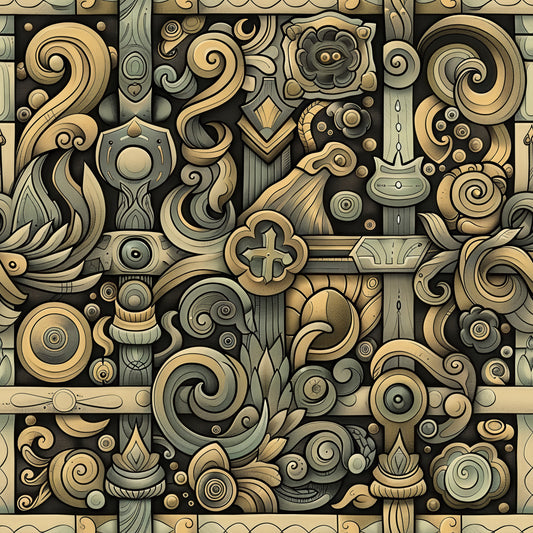
Real talk: Temple Flux stands out in Aztec Underground for having the most organic flow despite all the architectural elements—those spirals keep your eye moving rather than landing on any single focal point, which creates rhythm without repetition. This makes it simultaneously the most cohesive and most hypnotic design in the collection. The sage accents prevent the metallics from feeling too precious or formal, which can make spaces feel more livable, but the density of detail means small rooms might feel overwhelming if you go wall-to-wall. If you prefer Serpent Hall's clear architectural hierarchy or Conquest Coil's ornamental abundance, Temple Flux's balanced-but-busy composition might feel indecisive. But if you're drawn to that specific quality—the idea that complexity can still feel harmonious—Temple Flux articulates that philosophy clearly.
The overlapping layers create subtle shadow effects that shift with changing light throughout the day, while the sage tones ground the metallics and prevent the pattern from reading as monochromatic—meaning the design reveals different aspects in morning versus evening conditions.
For people who appreciate controlled chaos, design professionals who understand that ornate doesn't mean overwrought, history enthusiasts who prefer interpretation over reproduction, and anyone who believes maximum visual interest can coexist with compositional balance.
Available across three material tiers—because architectural grandeur deserves proper foundation.
Collection note: Part of the Aztec Underground series, where we reimagine ceremonial architecture through contemporary abstraction, celebrate dimensional complexity, and prove that ancient inspiration doesn't require literal translation.
First wall? Our measuring guide takes ten minutes, and the peel-and-stick and paste-the-wall install guides walk you through hanging day.